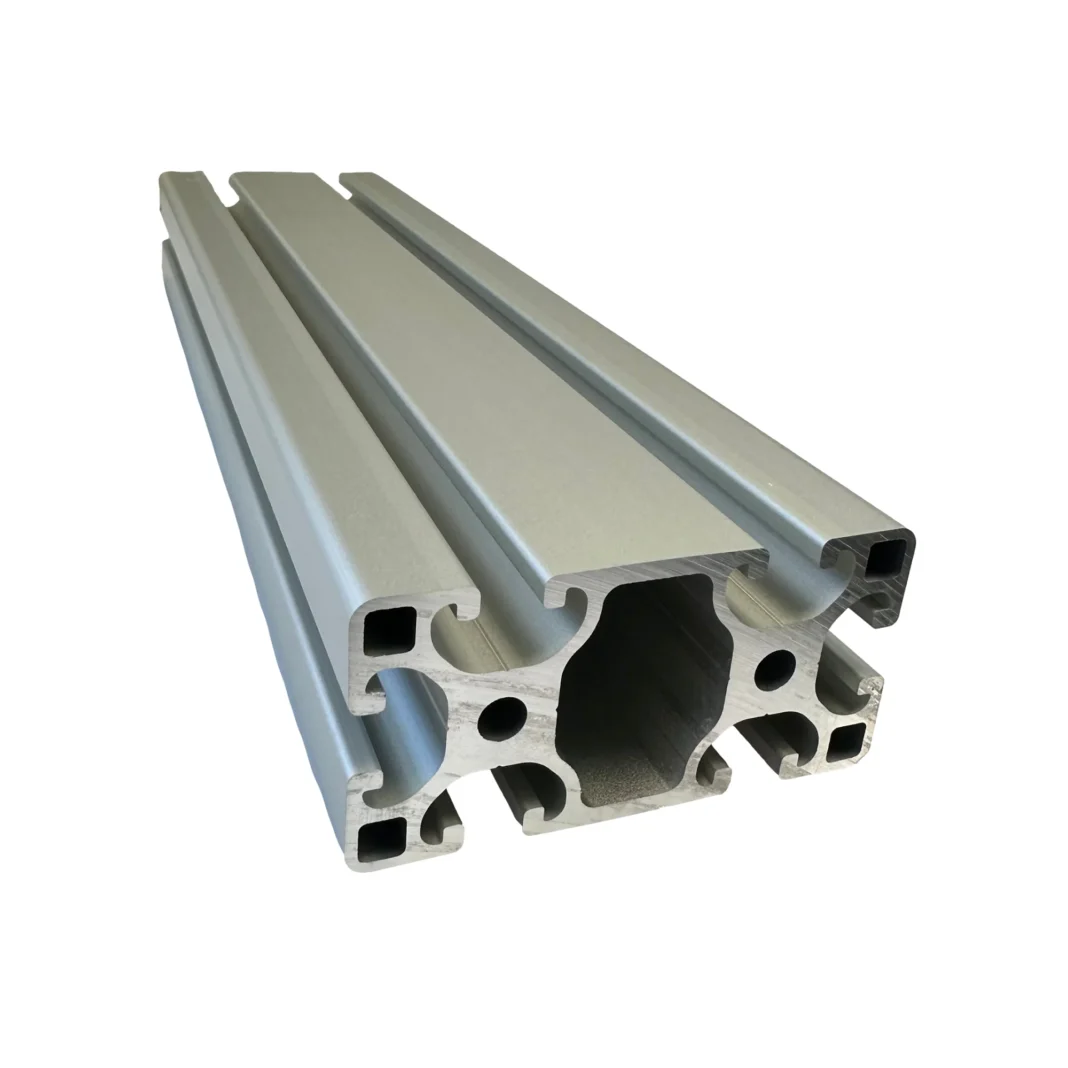
Redesigning Equipment? MiniTec Extruded Aluminum Framing Helps

Equipment rarely stays the same for long. Production goals shift, safety requirements evolve, and new automation systems demand updated layouts. MiniTec extruded aluminum framing offers a practical way to redesign machinery without tearing everything down and starting from scratch.

Why Choose MiniTec Extruded Aluminum for Industrial Redesign?

Industrial redesign often requires flexibility and precision at the same time. MiniTec Aluminum Framing uses extruded aluminum T slot profiles that allow components to be mounted, adjusted, or relocated without welding or cutting. This approach supports rapid changes in layout while maintaining structural integrity.

Engineers appreciate how T slot aluminum extrusion systems simplify modifications. Instead of fabricating entirely new steel frames, they can add or reposition brackets and accessories directly within the slot channels. This reduces downtime and keeps production schedules on track while enabling thoughtful redesign.

How T-Slot Flexibility Improve Equipment Modularity

T slot extrusion systems are built around channels that accept sliding fasteners and connectors. This design allows modules to be assembled and disassembled with minimal effort. Equipment can be divided into functional sections that connect seamlessly.

Such modularity benefits facilities that frequently update tooling or add automation. Extruded aluminum T slot framing supports incremental upgrades without disrupting entire lines. Modules can be swapped or expanded as operational demands grow.

Can MiniTec Solutions Reduce Machine Assembly Time?

Assembly time affects both cost and project timelines. MiniTec extruded aluminum framing relies on standardized profiles and connectors that speed up construction. Teams can assemble frames using simple tools instead of complex welding setups. Reduced assembly time means equipment can move from design to operation more quickly. Pre-engineered components fit together predictably, minimizing measurement errors. This efficiency supports fast turnarounds in prototype development and production line upgrades.

What Makes Extruded Aluminum More Durable Than Steel Frames?

Durability depends on resistance to corrosion and structural fatigue. Aluminum naturally forms a protective oxide layer that helps resist rust. In industrial environments exposed to moisture or chemicals, this characteristic can extend frame life.

Steel frames may require coatings or treatments to prevent corrosion. T slot aluminum extrusion systems eliminate much of that maintenance concern. While steel remains strong, extruded aluminum T slot profiles provide a balance of strength and corrosion resistance that suits many applications.

How Lightweight Framing Impact Equipment Mobility

Weight influences how easily equipment can be moved or reconfigured. MiniTec Aluminum Framing offers strength without excessive mass. Lightweight frames reduce strain on floors and simplify relocation.

Mobility matters during plant reorganizations or expansion. Equipment built with T slot extrusion systems can be disassembled and transported more easily than welded steel assemblies. This adaptability supports evolving manufacturing needs.

Is Reconfiguring MiniTec Systems Cost-Effective for Rapid Prototyping?

Rapid prototyping often requires multiple design iterations. MiniTec extruded aluminum framing allows engineers to adjust configurations quickly without fabricating new components each time. Parts can be repositioned within the extruded aluminum T slot channels to test different layouts.

Reusing profiles and connectors lowers material costs across multiple projects. Rather than scrapping steel frames after each revision, teams modify existing T slot aluminum extrusion structures. This efficiency encourages experimentation while controlling expenses.

Structural Fastening Methods That Enhance Equipment Stability

Stable fastening ensures equipment operates safely. T slot extrusion systems use specialized connectors that lock into channels and distribute loads evenly. These fasteners create secure joints without permanent welding.

Careful fastening design improves vibration resistance. Extruded aluminum T slot systems can incorporate gussets and brackets that reinforce corners. Stability increases without sacrificing the ability to adjust or reconfigure the frame later.

How Do Custom Aluminum Profiles Streamline Production Lines?

Custom profiles allow equipment designers to integrate mounting points, cable management paths, and guarding supports directly into the frame. MiniTec Aluminum Framing supports tailored extruded shapes that align with production requirements.

Streamlined frames reduce clutter and improve accessibility. Instead of adding separate brackets or supports, designers can incorporate them into the T slot aluminum extrusion structure. This integrated approach enhances efficiency on busy production floors.

Can MiniTec Framing Support Heavy-Duty Load Requirements?

Load capacity depends on profile size, cross-sectional design, and connection methods. Properly engineered extruded aluminum T slot frames can handle substantial weight, including conveyor systems and automation components.

Strength increases with thoughtful design and reinforcement. Engineers select larger profiles or additional bracing where needed. MiniTec extruded aluminum framing supports heavy-duty applications when configured correctly, offering both rigidity and flexibility.

Minitec Solutions provides modular aluminum framing systems designed to support industrial redesign and expansion projects. Their team assists with profile selection, structural planning, and system integration to meet specific operational goals. By offering adaptable MiniTec Aluminum Framing and technical guidance, they help manufacturers build equipment structures that evolve alongside their production needs

Topics

HVAC Repair in Lebanon TN and Common Electrical System Concerns

Electrical problems can stop an HVAC system without much warning. A unit may refuse to start, cycle on and off, trip a breaker, or run the fan while the heating or cooling side stays silent. Some causes are simple, but others involve high-voltage components that should be left to a trained technician. Tripped Breakers and Repeated Power Loss A tripped breaker is one of the first things many homeowners notice when an HVAC system suddenly shuts down. A single trip can happen for several reasons, including a temporary electrical load or another issue elsewhere in the home. The breaker can be reset once, but repeated trips deserve attention. Constantly resetting a breaker does not fix the underlying problem. The HVAC equipment may be drawing too much current, a motor could be struggling, or an electrical component may be failing. If the breaker trips again after the system starts, shut the equipment off and arrange professional service rather than continuing to reset it. People searching for HVAC near me after repeated breaker trips should describe exactly what happens, including whether the breaker trips immediately or after the system has been running for a while. That detail can help a technician narrow down the likely cause. Capacitors, Contactors, and Starting Problems Air conditioners and heat pumps rely on electrical parts that help motors start and continue running. Capacitors store and release electrical energy to assist components such as the compressor and fan motors. Contactors act like electrically controlled switches, sending power to parts of the system when the thermostat calls for heating or cooling. A failing capacitor may leave a motor humming without starting, cause hard starts, or stop a fan from running. A worn contactor can create intermittent operation or prevent the outdoor unit from receiving power. These parts sit inside equipment that contains dangerous voltage. They are not good DIY repair projects. Someone looking for heating and cooling near me because an outdoor unit hums, clicks repeatedly, or will not start should avoid opening service panels and have the system checked safely. Thermostat and Low-Voltage Control Issues Not every electrical HVAC problem involves the main power supply. Thermostats, control boards, relays, and low-voltage wiring also play a role in telling equipment what to do. A thermostat with weak batteries, incorrect settings, or a loose connection may fail to send the right signal. Before calling for HVAC service near me, a homeowner can safely check the thermostat mode, temperature setting, and batteries if the model uses them. If those basics look normal but the system still does not respond, the issue may be deeper in the control circuit. Damaged wiring, a failed transformer, or a control board problem requires proper testing. Randomly replacing parts can get expensive and may not solve anything. Blower and Fan Motor Electrical Trouble The indoor blower moves conditioned air through the duct system, while the outdoor fan helps the equipment release or absorb heat. Electrical problems affecting either motor can quickly change how the system operates. Warning signs can include a motor that will not start, a burning smell, unusual buzzing, weak airflow, or a fan that stops and starts unpredictably. Sometimes the motor itself is worn. In other cases, the problem may involve the capacitor, wiring, relay, or control board. For residents comparing HVAC Lebanon TN options, motor-related symptoms are worth mentioning when scheduling service. A technician can test the electrical side of the system and determine whether the motor is actually at fault or simply reacting to another problem. Wiring Problems Should Not Be Ignored Loose, overheated, or damaged wiring can lead to unreliable operation and may create a safety concern. HVAC systems experience vibration, temperature changes, and long operating cycles, all of which can affect electrical connections over time. Visible scorch marks, a persistent burning odor, melted insulation, or repeated electrical failures are reasons to stop using the equipment until it is inspected. Homeowners should not remove panels or tighten internal electrical connections themselves. People looking for heating and cooling in Lebanon TN may also notice issues after a storm or power interruption. If the system behaves differently afterward, professional diagnosis is safer than guessing at the cause. When an Electrical Issue Needs Professional HVAC Repair A few checks are reasonable for homeowners. Make sure the thermostat is set correctly, replace dead thermostat batteries, verify that the HVAC switch has not been turned off accidentally, and check whether a breaker has tripped. If a breaker trips again, stop there. Electrical troubleshooting beyond those basics requires the right tools and training. Technicians can measure voltage, test capacitors and motors, inspect control circuits, and look for overheated or damaged components without relying on guesswork. Homeowners who need HVAC service in Lebanon TN can...

What Makes an Epoxy Garage Floor Resistant to Tire Plasticizers?

Warm tires can leave behind more than dirt after...

Affordable Print Marketing Is Making a Comeback and Here Is Why

For most of the last decade, small business owners...

How to Determine If You Need Custom Industrial Heaters for Your Setup

Efficient manufacturing depends on accurate heat just as much...

Essential Guide to Bulk Rock Delivery Near Me

A pile of stone might not look exciting at...

Precision-crafted gaming mousepads for every playstyle

A well-chosen gaming mousepad can have a significant impact...

The Little Things We Ignore Until They Fix Everything

I used to think spending money on small fashion...

Related Articles